


-
Позвоните нам : +86 13728718457
-
Свяжитесь с нами по электронной почте : Lexie@Sharicca.com
Позвоните нам : +86 13728718457
Свяжитесь с нами по электронной почте : Lexie@Sharicca.com

Для брендов, оптовиков и покупателей, приобретающих продукцию под собственной торговой маркой.,Беспроводные бюстгальтеры-гелевые бюстгальтеры (производство ODM и OEM) Предлагаются товары с высокой маржой прибыли, но также несут в себе скрытые риски для качества. Среди всех проблем наиболее неправильно понимается пожелтение со временем, и именно оно чаще всего приводит к спорам после доставки.
В этом руководстве в формате часто задаваемых вопросов объясняется, что является нормой, чего можно избежать и что на самом деле контролируют профессиональные фабрики, помогая покупателям принимать обоснованные решения о выборе поставщиков и избегать дорогостоящих ошибок.
Часто задаваемые вопросы 1: Пожелтеют ли бюстгальтеры с клейкой основой из геля со временем?
Краткий ответ: Да, незначительное пожелтение в течение длительного времени возможно.
Желеобразный клей, используемый в прозрачных желеобразных бюстгальтерах и прозрачном клейком белье, представляет собой полимерный материал. Как и все полимеры, со временем он может подвергаться незначительному окислению, особенно в прозрачном или полупрозрачном виде.
Важный момент для покупателей: пожелтение — это свойство материала, а не автоматически производственный дефект.
Часто задаваемые вопросы 2: Могут ли профессиональные фабрики производить бюстгальтеры-гелевые бюстгальтеры, которые на 100% не желтеют?
Ни один профессиональный производитель не может реально гарантировать, что гелеобразный клей навсегда останется совершенно бесцветным.
Опытные заводы добиваются следующих результатов:
Любые заявления о том, что изделие «никогда не пожелтеет» или «гарантия 100% отсутствия пожелтения», следует рассматривать как сигнал о риске, а не как преимущество.
Часто задаваемые вопросы 3: Почему пожелтение происходит даже при высоком качестве продукции?
На пожелтение влияют факторы, выходящие за рамки производственного процесса, в том числе:
Заводы могут снизить чувствительность, но не могут в полной мере контролировать логистику и условия хранения на последующих этапах.
Что на самом деле контролируют профессиональные фабрики по производству бюстгальтеров из геля: факторы, находящиеся под контролем внутри фабрики.
Неконтролируемые факторы после отгрузки
Неконтролируемые факторы после того, как бренд продает продукт потребителям.
Профессиональное производство заранее предупредит вас об этих неконтролируемых факторах, которые могут вызвать... Высококачественные невидимые бюстгальтеры-гелевые валики до желтого цвета, а также информация о правильных методах стирки и ухода за бюстгальтерами из геля.
Сравнительная таблица: производство бюстгальтеров-гелей неопытными и профессиональными производителями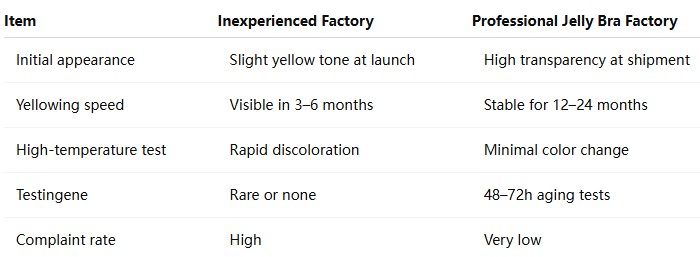

Часто задаваемые вопросы 4: Как профессиональные заводы проверяют риск пожелтения?
Опытные производители полагаются на данные, а не на обещания, в том числе:
Эти тесты помогают определить безопасный период для продажи, позволяя покупателям с уверенностью планировать циклы пополнения запасов.
Часто задаваемые вопросы 5: Является ли пожелтение дефектом качества или коммерческим риском?
С точки зрения B2B, пожелтение — это прежде всего коммерческий риск, а не однозначный недостаток качества.
Проблема возникает только тогда, когда:
Рекомендуемые стратегии управления запасами для разных типов покупателей
Быстрая мода, одежда для торжественных мероприятий, свадебное нижнее белье
Уровень риска: Очень низкий
Премиальные бренды под собственной торговой маркой и бренды с большим ассортиментом товаров.
Рекомендуемые методы:
Уровень риска: управляемый при надлежащем планировании
Часто задаваемые вопросы 6: Как покупатели должны сообщать о риске пожелтения внутри компании или розничным продавцам?
Профессиональное и точное утверждение, используемое опытными производителями:
Желеобразный клей — это полимерный материал. Хотя незначительное изменение цвета с течением времени является естественным свойством материала, профессиональные производственные процессы и составы, предотвращающие пожелтение, могут значительно замедлить этот процесс и обеспечить долговременную визуальную стабильность в течение обычных циклов продаж.
Такая формулировка снижает количество споров и согласовывает ожидания по всей цепочке поставок.
Основные выводы для покупателей B2B
✔ Гарантии того, что бюстгальтеры на клейкой основе останутся бесцветными, не предоставляются.
✔ Профессиональные заводы задерживают и контролируют, а не отрицают пожелтение.
✔ Реальный риск при закупках заключается в нереалистичных обещаниях, а не в материальной реальности.
Выбор производителя бюстгальтеров-гелей, ориентированного на процессы и обеспечивающего прозрачность, защитит ваш бренд, вашу прибыль и вашу долгосрочную стратегию закупок.
Если вы закупаете бюстгальтеры на клейкой основе, невидимые липкие бюстгальтеры или белье на клейкой основе и хотите получить четкие данные, прозрачные стандарты тестирования и предсказуемые характеристики продукции, сотрудничайте с производителями, которые честно объясняют риски и знают, как их контролировать.
Конечно, вы можете связаться с фабрикой нижнего белья Chuangrong! Мы с удовольствием ответим на ваши вопросы и поможем в производстве и развитии вашего бренда!
📩 Электронная почта: Lexie@Sharicca.com
🌐 Вебсайт: www.chuangrongapparel.com
ТЕГИ :